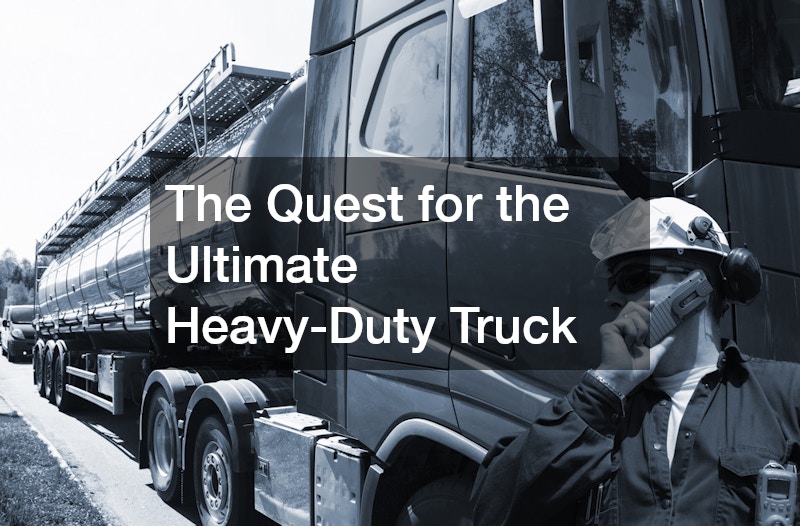
The modern heavy-duty truck is far more than a simple vehicle designed to move cargo from point A to point B. It is a highly sophisticated, multi-ton mobile office, an engineering marvel, and the foundational backbone of the global supply chain. From the interstate highways hauling consumer goods to the tight, debris-filled alleyways of major metropolitan areas, the demands placed on these mechanical workhorses are unprecedented. For fleet managers, independent operators, and automotive engineers, the search for the “ultimate” heavy-duty truck is a continuous journey. It is a balancing act where raw horsepower, long-term durability, driver safety, and cutting-edge technology must all converge into a single chassis.
Historically, this quest focused entirely on the numbers under the hood. A truck was deemed “ultimate” if it possessed the highest torque rating, the most resilient steel frame, and a diesel engine capable of running hundreds of thousands of miles without a major overhaul. While those mechanical fundamentals remain deeply vital, the definition of a superior heavy-duty vehicle has expanded significantly. Today, a truck must not only survive the brutal stress of daily operations but also adapt to tightening environmental regulations and shifting economic landscapes.
The Evolution of Vocational Power
To understand where the heavy-duty market is heading, one must look at the vocational trucking sector. Vocational trucks—such as refuse collectors, dump trucks, cement mixers, and terminal tractors—operate under some of the most unforgiving duty cycles imaginable. Unlike long-haul trucks that cruise at consistent speeds on smooth highways, vocational rigs endure constant stop-and-go driving, high PTO (Power Take-Off) demands, and severe structural strain.
In this demanding arena, companies like Battle Motors have stepped forward to redefine what a severe-duty vehicle can achieve. Formerly known as Crane Carrier Company, a legacy manufacturer with decades of experience building rugged work trucks, Battle Motors has successfully bridged the gap between old-school mechanical resilience and next-generation propulsion. By focusing on heavy-duty electrification alongside traditional diesel and compressed natural gas (CNG) platforms, they illustrate a broader industry trend: the ultimate truck is no longer defined by fuel type alone, but by total operational efficiency.
The integration of advanced technology into these heavy-duty frames has fundamentally changed how fleets operate. For instance, modern severe-duty trucks are increasingly built around specialized operating systems, such as Battle Motors’ RevolutionOS™. These digital platforms provide real-time telematics, monitoring everything from battery state-of-charge and torque output to preventative maintenance indicators. By transforming a truck into an intelligent, data-gathering node, fleet managers can optimize routes, minimize downtime, and dramatically extend the lifespan of their assets. This blend of intelligence and iron is proving to be the real milestone in the quest for the ultimate commercial vehicle.
Prioritizing the Human Element
Another critical metric in the development of the ultimate heavy-duty truck is the driving experience itself. For decades, driver comfort was largely treated as an afterthought in the heavy-duty segment. Cabs were loud, rides were punishingly stiff, and visibility was limited. However, a persistent shortage of qualified drivers, coupled with an increased corporate focus on workplace safety, has forced a massive paradigm shift.
Engineers are now designing truck interiors from an ergonomic, human-centric perspective. Modern low-entry cabs feature lower step-in heights to drastically reduce the risk of slips, falls, and repetitive strain injuries for workers who must exit and enter the vehicle dozens of times a day. Furthermore, the introduction of wraparound windshields, lower curbside windows, and advanced camera systems has minimized dangerous blind spots in tight urban spaces, protecting pedestrians and drivers alike.
Inside the cabin, the layout resembles a premium passenger vehicle more than a piece of industrial machinery. Multi-functional digital dashboards, noise-dampening insulation, and highly adjustable air-ride seating help combat driver fatigue. When operators are less fatigued, they are inherently safer, more alert, and more productive. Therefore, the ultimate truck must be measured by how effectively it protects and empowers the human being sitting behind the wheel.
Balancing Sustainability and Severe Duty
Perhaps the most complex hurdle in the quest for the ultimate heavy-duty truck is the transition toward sustainable energy. The sheer weight of class 7 and class 8 vehicles means that transitioning away from traditional fossil fuels requires revolutionary engineering. Battery technology must be robust enough to handle the immense weight loads and continuous power draws of heavy equipment without sacrificing the vehicle’s payload capacity or operational range.
The market has responded not with a single catch-all solution, but with a multi-tiered approach. For urban delivery and municipal refuse collection—where routes are predictable, and vehicles return to a central depot every night—battery-electric vehicles (BEVs) are becoming incredibly viable. They offer zero tailpipe emissions, near-silent operation in residential neighborhoods, and instant torque. Conversely, for regional distribution and severe-duty tasks requiring round-the-clock operation, high-efficiency clean diesel and CNG engines remain indispensable.
The ultimate heavy-duty truck is not a static concept, nor is it a single model that fits every application. Instead, it is a philosophy of continuous adaptation. Manufacturers that can successfully merge a legacy of rugged, all-steel construction with the digital, electrified future are the ones leading the charge. As logistics demands grow and the urban environment becomes increasingly congested, the machines tasked with keeping the world moving must be smarter, tougher, and cleaner than ever before. The quest continues, driven forward by engineering breakthroughs that turn the demanding roads of today into the highly efficient corridors of tomorrow.
Related Posts

What Are the Best Practices for Car Maintenance?
Car maintenance is essential to ensure vehicle longevity, safety, and efficiency. Regular maintenance not only helps extend the life of your vehicle but also keeps […]
How Forklift Rental Companies Can Save Your Business Time and Money
In today’s competitive market, businesses are under pressure to reduce costs while improving efficiency. Forklift rental companies offer a practical solution by providing access to […]
5 Ways to Increase Fork Lift Sales
In today’s competitive market, increasing fork lift sales requires strategic planning and execution. With businesses constantly evolving and industries moving at a rapid pace, it’s […]