The sudden jolt of an unexpected impact on the road can leave even the most seasoned drivers feeling completely disoriented. In the immediate moments after a vehicle collision, the human body is flooded with adrenaline, a physiological response that often masks physical injuries and clouds cognitive judgment. Amid the flashing hazard lights and the overwhelming confusion of the scene, executing a clear plan of action can feel nearly impossible. Yet, the decisions made during these critical first minutes carry immense weight. They directly influence personal safety, legal protection, and the eventual restoration of the vehicle’s structural integrity.
Navigating the complex aftermath of a motor vehicle accident requires a systematic approach. Property damage, insurance negotiations, medical assessments, and mechanical evaluations all converge simultaneously. Without a structured framework, drivers frequently find themselves overwhelmed by conflicting advice and the daunting task of piecing their lives back together. This guide serves as a practical roadmap, breaking down the essential steps every motorist should follow to protect their health, preserve their legal rights, and ensure their vehicle receives the meticulous care required to return safely to the road.
Immediate On-Scene Safety and Emergency Coordination
The absolute priority following any traffic mishap is the preservation of human life and the prevention of further injury. Before examining the exterior panels, the occupants must assess themselves and others for injuries. If the vehicle is still operational and positioned in a hazardous location, the driver should carefully maneuver it to the shoulder. Once situated in a safer zone, engaging the parking brake and activating the hazard lights is vital to alert oncoming motorists who may not realize traffic has ground to a halt.
Once the immediate perimeter is secure, notifying emergency services is the next step. Even in minor fender benders where no party appears visibly injured, requesting a law enforcement presence is crucial. Police officers provide objective documentation of the scene, creating an official report that details road conditions and initial statements. While waiting for the authorities, collecting evidence becomes a priority if it can be done safely. Taking clear photographs of the vehicle positions, license plates, and any visible damage provides an unalterable record of the event. If the vehicle has suffered extensive structural harm, arranging for a professional towing service to transport it to a secure garage is the safest course of action.
Managing Immediate Roadside Complications and Vehicle Security

Beyond primary structural damage, secondary complications often arise right at the scene of an accident. Modern vehicles are packed with sophisticated electronic control units, security modules, and intricate wiring harnesses that run through the doors and steering columns. A sudden, violent impact can easily disrupt these delicate systems, causing the vehicle’s onboard computer to initiate a security lockout or completely disable the electronic ignition system. Drivers frequently find themselves in situations where keys are physically bent, broken off inside a damaged ignition cylinder, or the electronic key fob completely loses communication.
When access to the vehicle is compromised or the security system prevents the doors from unlocking, trying to force entry can cause extensive cosmetic and structural damage. In these specific circumstances, contacting a specialized auto locksmith is the most prudent decision to resolve the lockout safely. These mobile professionals possess the specialized diagnostic equipment required to reprogram transponder keys on-site, bypass corrupted security codes, and extract broken physical keys from damaged locks without compounding the existing vehicle damage. Securing the cabin allows the owner to clear out important documents, registration papers, and personal items before the car is moved to a long-term storage facility.
Protecting Legal Interests and Navigating Insurance Claims
Once the physical chaos of the accident scene has settled, the focus shifts toward the administrative and financial realities of the situation. Dealing with insurance companies can be a daunting experience, as claims adjusters are fundamentally tasked with minimizing financial payouts for their employers. It is a common misconception that a driver must accept the initial settlement offer or use the specific repair shops recommended by an insurance provider. To protect one’s long-term financial health and ensure that all property losses are fully compensated, seeking professional guidance is often essential. Consulting with experienced auto accident attorneys can make a profound difference in the trajectory of a claim, providing victims with an advocate who understands the intricate nuances of personal injury law and insurance policy fine print.
Legal professionals assist in gathering vital evidence, interviewing witnesses, and building a comprehensive case that accurately reflects the true scope of the damages sustained. This protection prevents insurance companies from rushing a vulnerable individual into a premature settlement. An attorney can manage all direct correspondence with the opposing party’s legal representation, alleviating a significant amount of stress from the injured driver. By establishing a robust legal foundation early in the process, motorists ensure that they possess the financial resources necessary to cover high-quality vehicle restorations and any ongoing healthcare needs.
The Mechanics of Structural Restoration and Body Work
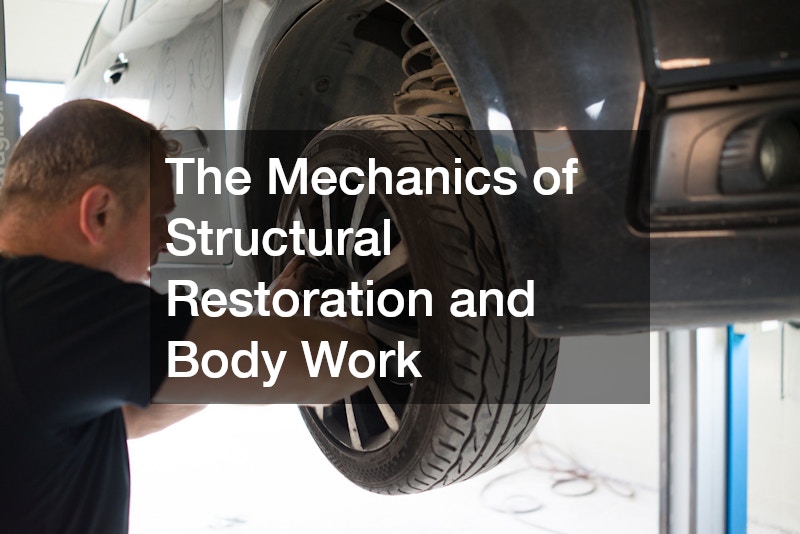
With the legal and administrative framework established, the physical restoration of the vehicle can commence. The exterior of a modern automobile is designed with highly engineered crumple zones, which are intentionally built to deform and absorb the tremendous kinetic energy generated during an impact. While this design feature is incredibly effective at protecting the human occupants inside the cabin, it often leaves the vehicle looking completely devastated after a collision. Restoring a vehicle to its pre-accident condition involves far more than merely replacing dented body panels or applying a fresh coat of paint; it requires a deep understanding of structural metallurgy, frame alignment, and advanced safety systems.
Choosing a certified facility that specializes in comprehensive auto collision repair is critical to ensuring the vehicle is truly safe to drive again. Technicians at these specialized facilities utilize heavy-duty frame-straightening machinery guided by computerized laser measuring systems to pull the vehicle’s underlying chassis back to its exact factory specifications. If the structural frame remains even slightly misaligned, the vehicle’s factory safety ratings are entirely compromised, meaning it will not protect the occupants correctly in a subsequent accident. Modern body shops must carefully recalibrate the various proximity sensors, radar units, and cameras embedded within the bumpers, ensuring that advanced driver assistance systems function perfectly when the vehicle returns to service.
Investigating Hidden Under-the-Hood Powertrain Damage
While visible cosmetic damage to a vehicle’s outer shell is easy to identify, internal mechanical components often suffer severe, invisible trauma during a collision. The violent forces of an impact travel straight through the vehicle’s frame, putting immense stress on powertrain assemblies, mounting brackets, and fluid cooling systems. A vehicle that appears to have escaped a crash with only minor bumper damage may actually be harboring critical mechanical failures beneath the hood. It is standard practice for a thorough post-accident inspection to involve a deep diagnostic review of the mechanical powertrain to ensure occupant safety.
When a vehicle experiences a front-end collision, the radiator, core support, and engine accessories are often pushed backward into the block. This can cause hairline fractures in the aluminum engine block, damage the serpentine belt system, or crack the intake manifold, necessitating extensive engine repairs to restore operational safety. Even minor shifting of the engine on its mounts can stress wiring harnesses, leading to poor performance, intermittent sensor faults, or unexpected dashboard warning lights that emerge days after the incident has occurred.
Given the extreme kinetic energy involved in traffic accidents, structural shifts can also place severe stress on the vehicle’s drivetrain components. The sudden deceleration can jar internal assemblies, shifting gears and driveshafts completely out of alignment. For this reason, professional transmission mechanics are required to perform specialized diagnostic tests, check fluid samples for metal shavings, and inspect complex valve bodies for internal hydraulic pressure leaks. Because the transmission is an intricate and expensive component, identifying accident-related internal damage early is vital to ensure that these costly fixes are fully documented and covered under the primary insurance claim.
Restoring Vital Steering, Suspension, and Braking Systems
Beyond the engine and transmission, a vehicle’s steering and suspension geometry are incredibly sensitive to sudden kinetic shocks. Hit a curb or take an impact from another vehicle, and the delicate control arms, tie rods, and steering knuckles can easily bend or fracture. Operating a vehicle with compromised steering components is a severe safety hazard, as it can lead to a sudden loss of vehicle control at highway speeds. Therefore, a comprehensive evaluation of the chassis dynamics is an indispensable step in the post-accident recovery blueprint to guarantee baseline safety.
A vital component of this evaluation involves a specialized inspection of the stopping mechanisms to see if a local brake repair facility needs to replace damaged calipers, warped rotors, or severed hydraulic lines. The intense forces of a crash can compress brake lines, damage anti-lock braking system wheel speed sensors, or cause the brake fluid reservoir to crack. Ensuring the braking system operates with absolute precision is non-negotiable before a vehicle is cleared to transport passengers again on public roads.
Following the thorough mechanical inspection of the braking hardware and suspension components, executing a precise car alignment is required to restore the vehicle’s proper handling characteristics. Technicians use computerized alignment racks to measure and adjust the angles of the wheels back to original manufacturer guidelines. A proper alignment ensures that the vehicle tracks completely straight down the road, prevents rapid tire wear, and allows electronic stability control systems to interpret steering inputs correctly, guaranteeing a smooth and predictable driving experience.
Specialized Protocols for High-Voltage and Modern Drivetrains
As the automotive landscape evolves, an increasing number of vehicles on the road incorporate alternative propulsion technologies, such as hybrid and fully electric drivetrains. These advanced vehicles present unique challenges in the aftermath of an accident due to the presence of high-voltage battery packs, complex inverter systems, and dual-propulsion setups that combine internal combustion engines with electric motors. Standard repair methodologies that apply to traditional gasoline vehicles are often completely inadequate and potentially dangerous when applied to these highly sophisticated machines.
Dealing with high-voltage electrical architecture requires specialized training, insulated tooling, and strict safety protocols to eliminate the risk of severe electrical shock or thermal runaway events in the battery cells. Facilities that specialize in hybrid auto repairs are uniquely equipped to handle these delicate situations, performing comprehensive insulation resistance tests and scanning the vehicle’s proprietary battery management software for hidden faults. Even a minor rear-end collision can compromise the cooling lines that regulate battery temperatures or damage high-voltage wiring conduits that run beneath the vehicle’s floor pans. Ensuring that these specialized systems are meticulously evaluated by certified alternative-energy technicians is a paramount safety requirement, preventing delayed electrical fires and ensuring the long-term efficiency and reliability of the eco-friendly powertrain.
Re-establishing Baseline Maintenance and General Reliability
Once all accident-related structural, mechanical, and specialized drivetrain issues have been completely resolved, the vehicle transitions from the intensive crisis-restoration phase back into the routine pattern of daily operation. However, a vehicle that has undergone major reconstruction often requires a period of close monitoring and an adjustment to its regular service schedule. The integration of new structural components, freshly remanufactured mechanical parts, and updated electronic modules means that the vehicle’s baseline operational dynamics have effectively been reset.
Establishing a relationship with a trusted, full-service auto repairs facility is essential during this post-recovery phase to monitor the vehicle’s ongoing performance. Regular follow-up appointments allow general technicians to double-check fluid levels, inspect newly installed hoses and clamps for minor leaks that may develop as parts settle, and ensure that all electronic modules continue to communicate seamlessly without throwing intermittent warning lights on the dashboard. This ongoing vigilance helps catch minor integration issues before they escalate into costly problems, giving the vehicle owner peace of mind that their car has truly been restored to its reliable, pre-accident condition. Maintaining meticulous records of all post-accident repairs and subsequent maintenance visits also preserves the vehicle’s residual market value.
A Methodical Approach to Roadway Recovery
Surviving a car accident is a stressful experience, but navigating the subsequent recovery process does not have to be overwhelming. By adopting a systematic approach—prioritizing immediate roadside safety, securing professional legal advocacy, and demanding meticulous structural and mechanical inspections—motorists can successfully protect their health, finances, and vehicles. A car is a highly integrated machine, where a flaw in one system can compromise the safety of the entire vehicle. Investing time into a comprehensive restoration process ensures that when the vehicle returns to the road, it does so with its structural integrity intact and its reliability completely restored for the miles ahead.