
A fleet of vehicles, whether it is a couple of family cars, a boat, a golf cart, and a motorcycle, or a small business’s work trucks, only earns its keep when it is actually running. Most owners stay on top of oil changes and tire rotations, but the systems that quietly fail are often the ones nobody thinks to check until something breaks down on the road or on the water. Understanding the less obvious maintenance needs of every vehicle type you own can save you thousands of dollars and a lot of downtime. This guide walks through the often-overlooked corners of vehicle upkeep so you can catch small problems before they become expensive ones.
Brake Systems Need More Than a Squeal Test
Most drivers wait for a screeching noise before thinking about their brakes, but by the time you hear that sound, the pads are often already damaging the rotors. A thorough auto brake service checks the entire system, including brake fluid condition, caliper function, and the wear pattern on each pad, not just how much material is left. Brake fluid absorbs moisture over time, which lowers its boiling point and can lead to a spongy pedal feel or reduced stopping power when you need it most.
Waiting until a warning light appears is a common mistake, since some vehicles do not alert drivers until the problem is fairly advanced. Getting brakes inspected at least once a year, or every time you have your tires rotated, helps catch uneven wear that could point to a bigger issue with calipers or suspension alignment.
- Have brake fluid flushed every two years or per manufacturer guidelines
- Listen for grinding, which usually means metal is contacting metal
- Ask for rotor thickness measurements during any inspection
- Pay attention to a pulsing brake pedal, which often signals warped rotors
Suspension Components Wear Out Quietly
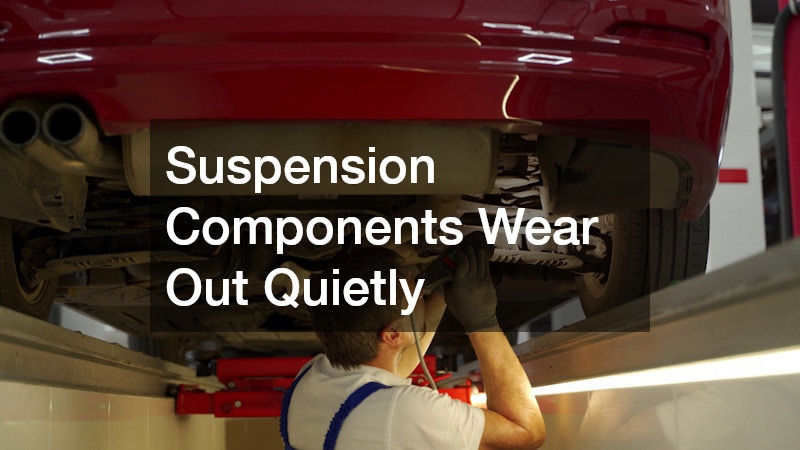
Suspension parts rarely fail all at once, which is exactly why they get neglected. Bushings, struts, and control arms degrade slowly, and the change in ride quality happens so gradually that many drivers do not notice until the vehicle feels noticeably rougher or starts pulling to one side. A proper auto suspension repair evaluation looks at ball joints, sway bar links, shocks, and struts together, since wear in one component often accelerates wear in another.
Ignoring suspension issues does not just hurt comfort, it also affects tire wear and braking distance. A vehicle with worn shocks takes longer to stop because the tires bounce slightly on rough pavement instead of maintaining full contact with the road. Catching these issues early keeps handling predictable and extends the life of your tires.
- Watch for uneven tire wear, especially cupping patterns
- Notice if the vehicle bounces excessively after hitting a bump
- Get an alignment check whenever new tires are installed
- Listen for clunking sounds over potholes or speed bumps
Wheels and Rims Deserve a Second Look
Potholes, curbs, and rough parking lots take a toll on wheels that many owners never think to inspect closely. A bent or cracked rim can cause a slow air leak, uneven tire wear, or a vibration that gets worse with speed, and these symptoms are often mistaken for tire balance problems. Professional rim repair can fix minor bends and cracks in many cases, restoring the wheel to a safe condition without the cost of a full replacement.
It is worth having wheels checked any time you hit a significant pothole or curb, even if nothing seems wrong right away. Small deformities in a rim can worsen over time with continued driving, especially at highway speeds, so early attention matters.
- Check for visible dents, cracks, or corrosion around the rim edge
- Address a persistent vibration promptly rather than assuming it will go away
- Ask a shop to check wheel balance after any curb strike
- Consider rim repair before buying new wheels, since it is often more affordable
Golf Carts Have Their Own Maintenance Calendar

Golf carts are often treated like toys rather than vehicles, but electric and gas models both have real maintenance needs that get overlooked. Battery terminals corrode, cables loosen, and controllers can degrade if a cart sits unused for long stretches between rounds or trips around the neighborhood. Routine golf cart service should include checking battery water levels on flooded lead-acid batteries, inspecting brake cables, and testing the charging system to make sure it is not overcharging or undercharging.
Owners who use their carts for property maintenance or transportation around larger lots put more strain on the drivetrain than casual weekend golfers. In those cases, scheduling more frequent golf cart services visits to examine the motor, solenoid, and speed controller can prevent a sudden breakdown far from the garage. Tires on golf carts also wear differently than car tires because of the lower speeds and tighter turns, so tread should be checked regularly.
- Clean and tighten battery terminals every few months
- Store carts with batteries at a partial charge if unused for extended periods
- Check tire pressure monthly, since low-speed vehicles are sensitive to underinflation
- Have the braking system inspected at least twice a year
Boats Require Attention Even When They Are Docked
A boat that sits unused for weeks between outings can develop problems that are easy to miss until launch day. Fuel systems are particularly vulnerable, since ethanol-blended gasoline can absorb moisture and degrade over time, leading to clogged injectors or carburetors. Many owners find it helpful to build a relationship with a boat dealer who can perform seasonal inspections, since they often catch corrosion, belt wear, or steering system issues that are hard for a casual owner to spot.
Saltwater exposure accelerates wear on nearly every metal component, from the propeller to the trailer hitch, so freshwater rinsing after every outing matters more than people realize. Even freshwater boats benefit from regular checks of the bilge pump, battery connections, and hull for blisters or cracks. Skipping these checks for a season can turn a small fix into a major repair bill.
- Rinse the hull, engine, and trailer after every saltwater trip
- Check fuel stabilizer levels before long periods of storage
- Test the bilge pump before each launch
- Inspect the propeller for dings or bent blades that reduce efficiency
Work Trucks Face Faster Wear From Daily Loads

Vehicles used for hauling, towing, or frequent stop-and-go driving wear out differently than a personal car used mainly for commuting. Heavier loads put extra strain on brakes, transmissions, and suspension components, which means a business relying on these vehicles needs a tighter maintenance schedule than the owner’s manual might suggest. This applies to more than just trucks, too, since golf carts used across large properties or resorts see similar daily wear and benefit from the same kind of scheduled golf cart repair. Regular fleet truck repair scheduling based on actual mileage and load patterns, rather than a generic calendar, helps prevent the kind of breakdown that takes a truck out of service for days.
Downtime for a work truck is not just inconvenient, it directly affects income if that vehicle is part of a business operation. Keeping detailed service records for each truck in a fleet makes it easier to spot patterns, like a transmission that consistently needs attention around the same mileage across multiple vehicles. This kind of tracking turns maintenance from a reactive scramble into a predictable, budgeted expense.
- Track mileage and service history separately for each vehicle in the fleet
- Inspect towing equipment, hitches, and trailer brakes regularly
- Rotate tires more frequently on trucks used for heavy hauling
- Schedule transmission fluid checks based on load history, not just mileage
Motorcycles Demand Specialized Seasonal Care
Motorcycles are often stored for months at a time in colder climates, and that inactivity creates its own set of problems. Fuel can go stale, tires develop flat spots from sitting in one position, and batteries lose charge faster than most owners expect. Beyond mechanical upkeep, reviewing motorcycle insurance coverage before riding season starts is a smart habit, since coverage needs can change if you have added accessories, changed your commute, or if your policy has lapsed limits that no longer match the bike’s value.
Chain maintenance is another area that gets overlooked, especially by newer riders who assume a chain only needs attention when it looks visibly dirty. A chain that is too loose or too tight accelerates wear on the sprockets and can even come off entirely in extreme cases. Regular cleaning, lubrication, and tension checks keep the drivetrain running smoothly and extend the life of expensive components.
- Use a battery tender during long storage periods
- Check tire pressure and look for flat spots before the first ride of the season
- Clean and lubricate the chain every few hundred miles
- Review motorcycle insurance annually to confirm coverage still fits your bike and usage
General Vehicles Benefit From Predictive Rather Than Reactive Care

Whether it is a family sedan or a fleet vehicle, most people only think about auto repair once something has already gone wrong. By the time a dashboard warning light turns on or a vehicle stalls in traffic, the underlying issue has often been building for weeks or months, quietly wearing down other components along the way.
Shifting to a predictive mindset, where small noises, smells, or handling changes are investigated right away, tends to be far less expensive than waiting for a full breakdown. A faint squeal from the brakes, a slight pull to one side while steering, or a sweet smell near the vents can all point to problems that are inexpensive to fix now but costly to ignore. Catching a worn belt or a low-grade coolant leak early might cost a fraction of what it takes to replace an overheated engine or repair damage from a roadside breakdown.
Predictive care also means paying attention to mileage-based service intervals rather than waiting for symptoms to appear at all. Timing belts, transmission fluid, and suspension components often have recommended replacement windows that, if followed, prevent failures before they start.
A shop that gets to know your vehicle over time can often spot early warning signs during a routine visit that an unfamiliar mechanic might miss. Technicians familiar with a vehicle’s history can compare current readings against past inspections, noticing gradual changes in tire wear, fluid condition, or battery performance that a one-time visit would never reveal.
Waiting for a warning light before addressing a vehicle issue often means the problem has already progressed past its cheapest, easiest fix. Predictive care flips that approach by tracking mileage intervals, fluid conditions, and wear patterns before they become breakdowns. For fleets especially, this shift can mean the difference between a scheduled ten-minute service stop and an unplanned tow.
Keeping a simple log of when services were performed, what was replaced, and any unusual symptoms noticed along the way gives both you and your mechanic useful history to work from. Note details like mileage at the time of service, the brand or part number of components replaced, and whether a noise or vibration was intermittent or constant. Over time, these entries can reveal patterns — a battery that consistently fails around the three-year mark, or a tire that wears unevenly every 15,000 miles — that point to underlying issues before they cause real damage.
This habit is especially valuable for households or businesses managing multiple vehicles, since it becomes easy to lose track of what was done on which car. A spreadsheet, a dedicated app, or even a notebook kept in the glove compartment can prevent costly duplication or missed services. A little organization up front makes every future visit faster and more accurate, and it gives mechanics the context they need to diagnose problems correctly the first time.
- Note any new sounds, smells, or vibrations as soon as they appear, and log the mileage when you first noticed it
- Keep receipts and service records organized by vehicle, whether in a folder or a simple spreadsheet, so patterns like recurring repairs become easy to spot
- Ask questions during routine visits instead of waiting for a breakdown — inquire about brake pad thickness, tire tread depth, and fluid condition
- Build a relationship with one trusted shop when possible for continuity, since a mechanic who knows a vehicle’s history can catch small issues before they escalate
- Track manufacturer-recommended service intervals for each vehicle rather than relying on memory, since schedules vary by make, model, and mileage
- Watch dashboard warning lights closely, and don’t dismiss intermittent ones as false alarms
Keeping any fleet of vehicles running well comes down to paying attention to the systems that do not announce themselves loudly until they fail. From brakes and suspension to boats, golf carts, motorcycles, and work trucks, each type of vehicle has its own quiet warning signs worth learning. Taking a proactive approach today, whether that means scheduling an inspection or simply reviewing your insurance coverage, will save you time, money, and stress down the road.