Automotive maintenance is one of the most significant responsibilities of vehicle ownership. For many, the sight of a dashboard warning light or the sound of a mysterious rhythmic thumping from under the hood triggers immediate anxiety. This stress often stems from a lack of information regarding what is happening behind the scenes. Understanding how to handle common car repairs and services is not just about saving money—though it certainly helps—it is about ensuring the safety of your passengers and extending the usable life of your second-largest investment.
The modern vehicle is a marvel of engineering, blending mechanical precision with complex computer networks. While older cars could often be fixed with a basic wrench set and some patience, today’s automobiles require a more nuanced approach. By learning the difference between a simple cosmetic fix and a critical mechanical failure, you can communicate more effectively with technicians and make informed decisions that protect your wallet.
Restoring Your Vehicle’s Exterior Integrity
The exterior of your car is its first line of defense against the elements and the most visible indicator of its value. Even the most careful drivers will eventually encounter road debris, runaway shopping carts, or tight parking garage pillars. When these incidents happen, the goal is to address the damage before rust or structural degradation can set in.
Minor imperfections, such as small dings or creases where the paint has not been cracked, are prime candidates for specialized techniques. Many technicians now utilize methods like paintless dent repair to massage the metal back into its original shape from the inside out. For most drivers, seeking professional dent repairs is the most efficient way to keep your car looking new without the high cost of traditional bodywork.
However, not all impacts are minor. When a vehicle is involved in a significant accident, the damage often goes deeper than the surface. Professional facilities specialize in collision repairs to ensure that the “crumple zones” and safety features of the car are still functional. If a frame is even slightly out of alignment, the car may not handle correctly or protect you in a future impact. Modern frame-straightening machines use lasers to measure the car’s dimensions down to the millimeter, ensuring that the suspension geometry is perfect. Without this precision, you might find that your car “dog-tracks” down the road or wears through tires at an alarming rate.
Choosing the Right Professional Service Center
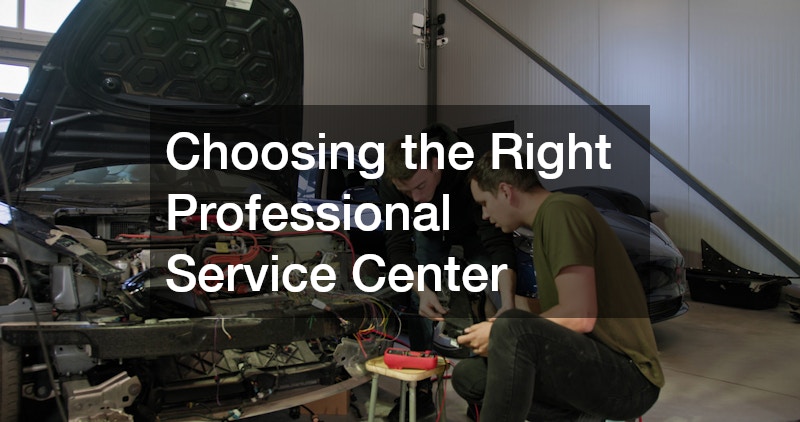
Finding a trustworthy shop is the foundation of a good car-care strategy. The relationship between a car owner and their mechanic should be built on transparency and technical competence. When your vehicle requires more than a simple oil change, you need to know that the facility has the right tools for the job. Not all shops are created equal; some focus purely on “lube and tune” services, while others are equipped for heavy-duty structural work.
Reputable auto body shops are often characterized by their certifications and the cleanliness of their work areas. Look for shops that are “ProFirst” certified or hold I-CAR Gold Class status. These designations mean the staff is constantly updating their skills as vehicle materials evolve from heavy steel to lightweight aluminum and carbon fiber. Aluminum, for instance, requires entirely different welding equipment and a clean room environment to prevent cross-contamination with steel dust, which can cause galvanic corrosion. A quality shop will be happy to walk you through their process and provide a detailed, written estimate before any bolts are turned.
One of the biggest hurdles during a major repair is the loss of mobility. A major engine overhaul or structural repair can take a week or more, depending on parts availability. If your vehicle is going to be out of commission for several days, check if the repair center has an agreement with a car rental agency. Many insurance policies include loss-of-use coverage, but even if you are paying out of pocket, having a rental car coordinated through the shop can save you a significant amount of logistical headache. Some premium shops even provide “loaner” vehicles for their loyal customers, which is a sign of a business that values long-term relationships over one-time transactions.
Essential Tire and Wheel Maintenance
The connection between your car and the road is limited to four patches of rubber, each roughly the size of a human palm. This makes tire and wheel maintenance perhaps the most critical safety task you can perform. Neglecting your tires doesn’t just lead to poor gas mileage; it leads to increased braking distances and a higher risk of hydroplaning in wet weather.
A routine visit to a local tire shop can prevent a host of issues. Technicians can perform rotations, which ensure that the front tires (which handle the steering and most of the braking) and the rear tires wear down at an even rate. They will also check the “DOT” date code on your tires; rubber degrades over time even if there is plenty of tread left, and tires older than six years are generally considered unsafe regardless of their appearance. During these visits, they should also check your alignment. If your car pulls to one side, your tires are being “scrubbed” across the pavement, which can kill a brand-new set of tires in just a few months.
The wheels themselves are also prone to damage. Potholes are the natural enemy of the modern alloy wheel. If you feel a vibration in your steering wheel at certain speeds, or if you notice your tire losing air pressure every few days, you might have a bent rim. Instead of replacing an expensive OEM wheel, which can cost upwards of $600, a professional rim repair service can often straighten the metal using hydraulic presses and heat. This process restores the wheel to a “true” circular shape, eliminating vibrations and ensuring the tire bead seats properly. They can even refinish the face of the wheel to remove “curb rash,” restoring the aesthetic appeal of your vehicle.
Mastering Engine and Power Delivery Systems

The heart of your car is the internal combustion engine (or electric motor), and the system that delivers that power to the wheels is the gearbox. These are the most expensive components to replace, so staying ahead of their needs is vital for long-term ownership. Engine oil is often called the “lifeblood” of the car, but the transmission fluid is equally important for the health of your drivetrain.
If you notice your engine revving high before the car moves or feel a “clunk” when the vehicle shifts gears, you may be experiencing issues with the transmission. This system relies on pressurized fluid to cool, lubricate, and move internal parts like planetary gears and clutch packs. Even a small drop in fluid level can cause overheating and permanent damage. Regular fluid flushes, as recommended by your owner’s manual, are the best way to avoid a multi-thousand-dollar replacement. Be wary of “universal” fluids; most modern cars require very specific synthetic blends to operate correctly.
Modern cars are essentially computers on wheels, and they are designed to tell you when something is wrong long before you feel a physical symptom. When a light appears on your dash, it means the Engine Control Unit (ECU) has detected a reading that is outside of normal parameters. A technician will perform auto diagnostics by plugging a scanner into the On-Board Diagnostics (OBD-II) port. This scan provides specific codes that point the mechanic toward the failing subsystem. However, the code is only the starting point. For example, a “lean condition” code doesn’t necessarily mean a sensor is bad; it could mean there is a cracked rubber hose allowing extra air into the engine. A skilled tech uses this data to perform targeted tests, ensuring you aren’t paying for parts you don’t need.
Ensuring Safety Compliance and Reliable Electronics
The electrical system in a car is the “nervous system” that coordinates everything from the spark plugs to the power windows. As cars become more automated, the complexity of this wiring increases exponentially. A modern luxury car can have over 100 separate computer modules communicating over a “CAN-bus” network. A single frayed wire or a corroded ground can cause a cascade of ghost symptoms that seem unrelated, like a radio that cuts out when you use your turn signal.
Scheduling a regular state inspection is a great way to force a professional “health check” on your vehicle. While these inspections are mandatory in many regions to ensure emissions and safety standards are met, they also serve as an opportunity to catch worn brake pads or leaking struts before they fail. In some states, the inspection includes a check of the “OBD-II readiness monitors,” which ensure your car’s computer has successfully tested its own emissions systems. It’s a low-cost insurance policy that ensures your car remains compliant with local laws and safe for the road.
When the car fails to start or the electronics begin to act erratically, you are likely looking at an auto electrical repair. While many people assume a dead battery is the only electrical culprit, the issue could be a failing alternator, a parasitic draw (where a component stays on after the car is off), or a blown fuse. Specialized electrical technicians use multimeters and oscilloscopes to trace the flow of current and find the exact break in the circuit. They might check the “voltage drop” across a cable to see if internal corrosion is preventing power from reaching the starter. Given how integrated modern infotainment and safety sensors are, maintaining a healthy electrical system is no longer optional—it is required for the car to function at all.
Advanced Strategies for Long-Term Ownership
The most successful car owners are those who don’t wait for a breakdown to visit a shop. They understand that a vehicle is a collection of systems that rely on each other. When one system is neglected, it places undue stress on the others. For example, worn-out shocks will cause your tires to wear unevenly, which then puts more strain on your steering components and reduces your braking efficiency. This is known as “cascading failure,” and it is the primary reason why “cheap” cars often become very expensive very quickly.
Creating a “car folder” is one of the simplest and most effective things you can do. Keep every receipt for every oil change, tire rotation, and repair. This documentation is invaluable for two reasons. First, it allows you to track the intervals for recurring maintenance so you don’t accidentally pay for the same service twice. Second, when it comes time to sell your vehicle, a folder full of receipts proves to a potential buyer that the car was cared for, often allowing you to command a much higher asking price. Buyers are much more comfortable paying top dollar for a high-mileage car if they can see a clear history of preventive care.
Furthermore, don’t be afraid to ask questions. A good mechanic is also a teacher. If they recommend a service, ask them to show you the old part or explain why the service is necessary at this specific mileage. A worn serpentine belt, for instance, will show small “micro-cracks” in the ribs; seeing this for yourself helps you understand the urgency of the repair. Understanding the “why” behind the maintenance helps you prioritize your budget and ensures you aren’t being upsold on unnecessary “flushes” that your manufacturer doesn’t actually recommend.
Understanding the Financial Side of Repairs

Budgeting for repairs is just as important as the repairs themselves. Experts suggest setting aside roughly $50 to $100 per month into a dedicated “car fund.” While most months you won’t touch this money, it will be there when you inevitably need a set of tires or a new brake job. This prevents you from having to put emergency repairs on high-interest credit cards, which only adds to the long-term cost of the vehicle.
Additionally, consider the “Rule of 50%.” If a single repair cost exceeds 50% of the car’s total market value, it may be time to consider trading the vehicle in. While sentimental value is real, pouring thousands of dollars into an aging vehicle with other looming issues (like a rusted subframe or a failing engine) can be a “sunk cost” fallacy. A professional mechanic can give you a “pre-repair inspection” to let you know if there are other major failures on the horizon before you commit to a large bill.
Navigating car repairs is an ongoing education. By staying informed and finding the right partners in the automotive service industry, you can transform your vehicle from a source of stress into a reliable tool that serves you for hundreds of thousands of miles. Whether you are dealing with a small scratch or a major mechanical overhaul, the key is to act quickly and use the right resources to get back on the road safely.